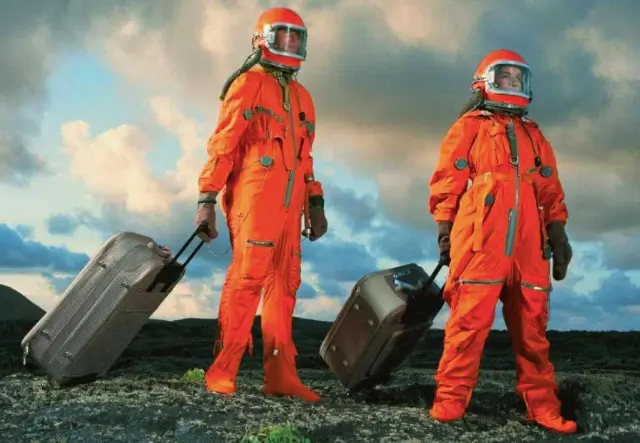
Space travel is entering a transitional epoch, where routine interplanetary missions become ordinary logistics. Advances in propulsion, autonomy, and life support promise longer, safer transit with fewer resupply gaps. Modular habitats and resilient health systems aim to sustain isolated communities yet remain adaptable to unforeseen challenges. Governance, economics, and space law will shape access and stewardship. The cadence of exploration could unify disparate settlements, but the path raises questions about control, fairness, and long-term resilience that linger just beyond the horizon.
How Space Travel Is Entering a New Normal
The ascent of routine space travel marks a shift from rarity to reliability, reshaping expectations for what constitutes normal in the final frontier.
In this emerging cadence, spaceflight fatigue becomes a functional signal, not a flaw, guiding crews toward sustainable tempo.
Orbital logistics reorganizes missions, balancing cadence, supply, and cadence again, revealing a resilient framework for future, freer exploration.
The Technologies Fueling a Multi-Planetary Era
A curious tension animates the technologies propelling a multi-planetary era: how propulsion breakthroughs, life-support ecosystems, and autonomous systems converge to turn interplanetary travel from episodic endeavor into routine capability.
Propulsion architectures evolve alongside resilient habitats and efficient resource utilization, enabling reusable missions, modular payloads, and adaptive logistics.
The trajectory remains speculative, yet calculable, revealing a freedom-seeking civilization mastering cross-planetary leverage.
Building Habitats, Safety, and Everyday Life in Space
Envisioning life beyond Earth requires assessing how habitats are designed, safeguarded, and day-to-day lived in within confined, resource-reusing environments.
The examination surveys habitat design choices, life support systems, and hazard mitigation strategies, evaluating their resilience under isolation.
It also probes crew privacy, social dynamics, and psychological well-being, suggesting scalable, modular approaches that balance efficiency with humane, exploratory imperatives for sustainable space living.
Governing, Economics, and the Responsible Space Frontier
space taxation, property rights
Frequently Asked Questions
How Will Long-Term Space Morale Be Maintained Among Crews?
The question posits ongoing strategies to sustain longevity resilience and crew camaraderie through adaptive routines, autonomous support, shared purpose, and reflective practice, suggesting that structured autonomy, creative collaboration, and psychological resilience will sustain morale over time.
What New Life Support Innovations Are Most Promising Next Decade?
A NASA Skylab case study suggests next decade innovations center on life support gains: closed loop systems with enhanced CO2 scrubbers and water reclamation. These raise ethics policy questions as space colonization pressures balance autonomy, safety, and freedom in exploration.
Can Private Citizens Access Space Travel Regularly Soon?
Private citizens may access space travel for occasional passenger flights soon, but frequent launches for tourism remain uncertain; regulatory, safety, and cost hurdles persist, though private citizens’ interest drives rapid innovation in space tourism and evolving passenger flight models.
How Will Space Debris Be Permanently Managed and Cleaned Up?
Space debris cleanup will rely on orbital management tools and cooperative capture missions, enabling targeted removal and waste reduction. Analysts speculate scalable nets and lasers may evolve, while governance, funding, and international will shape a persistent, curiosity-driven cleanup strategy.
See also: The Future of Space Tourism
What Are the Ethical Implications of Terraforming Other Planets?
Terraforming ethics raises questions about planetary rights and the moral balance between exploration and preservation. This detached observer notes varying values, speculative risks, and the freedom to imagine futures while urging careful governance, inclusive dialogue, and precautionary caution.
Conclusion
In the grand theater of space travel, routine interplanetary hops become the new commute, complete with climate-controlled pods and gravity that forgets its manners. Satellite-advised governments levy “space taxes” while life-support systems binge-watch resilience. Habitats sprout like lunar Ikea, safety drills resemble daily yoga, and trade routes hum with modular logistics. The future, curiously earnest, teeters between heroic frontier myth and spreadsheet reality, proving civilization can colonize stars as gracefully as it audits its own ambition. Satire, scientifically dressed, applauds the outcome.